Salt air is hard on a home, and the locks on a beachfront door take the worst of it. Coastal moisture and airborne salt creep into the cylinder, eat at the finish, and leave a once-smooth deadbolt stiff, gritty, and prone to seizing. The good news is that weatherproofing outdoor locks is straightforward once you understand what corrosion actually attacks and how to block it. In this guide, our team walks you through the materials, finishes, and maintenance habits that keep coastal hardware turning cleanly. Keep reading to learn how we protect locks in the harshest salt-spray conditions.
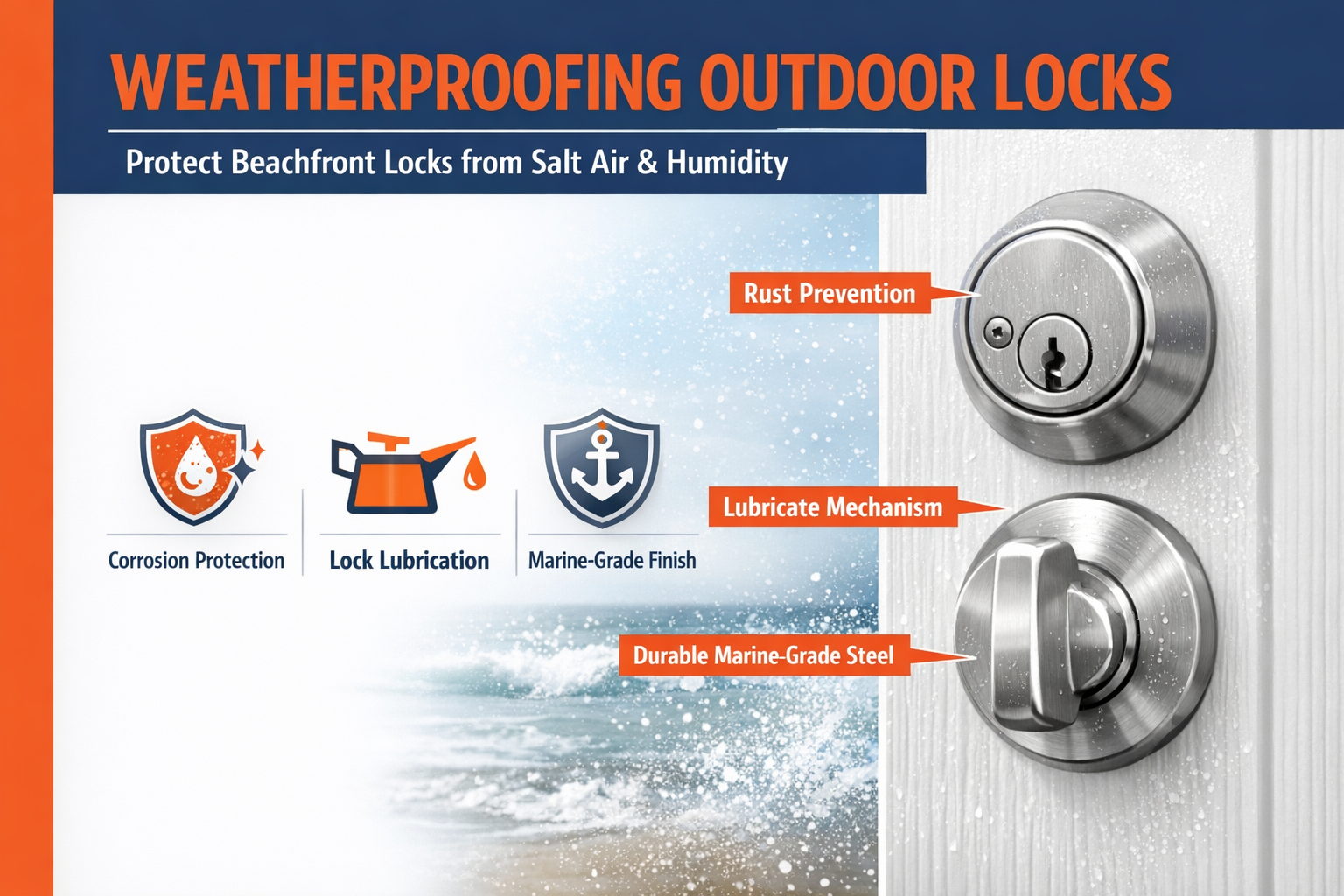
Salt air corrodes outdoor locks because chloride molecules pull moisture onto metal surfaces, accelerating rust and pitting inside the cylinder and bolt. The fix is a combination of corrosion-resistant materials, a marine-grade finish, the right internal lubricant, and a simple cleaning routine. Handle those four factors and an exterior lock will hold its own against the coast.
Why Weatherproofing Outdoor Locks Matters Near the Coast
Chloride from sea spray is hygroscopic, meaning it draws water out of the air and holds it against bare metal. That thin, salty film is what turns a healthy lock into a corroded one. It attacks two places at once: the visible finish on the handle and the hidden brass pins and springs inside the keyway. Once pitting starts, the key drags, the thumbturn lock stiffens, and the bolt no longer seats fully into the strike.
Strong deadbolt security depends on smooth mechanical movement. A bolt that only extends halfway is easy to defeat, so corrosion is a home safety issue, not just a cosmetic one. Protecting the hardware protects the door.
The table below compares common exterior lock options by how well they stand up to salt air. Use it as a quick reference when you select hardware for a coastal door.
| Material / Finish | Salt-Air Resistance | Best Coastal Use | Maintenance Need |
|---|---|---|---|
| Marine-grade 316 stainless steel | Excellent | Direct beachfront doors | Low |
| Solid bronze | Excellent | Coastal; forms protective patina | Low |
| PVD-coated brass | Very good | Exposed coastal entries | Low |
| Lacquered brass | Good | Covered porches near the coast | Moderate |
| Powder-coated aluminum | Good | Gates and secondary doors | Moderate |
| Chrome-plated steel | Fair | Sheltered entries only | Moderate to high |
| Zinc alloy (die-cast) | Poor | Inland / sheltered locations | High |
| Electroplated or painted steel | Poor | Not advised for coastal doors | High |
Choose the Right Material and Finish
Material selection is the foundation of any coastal install. Not every lock labeled "exterior" is built for salt air. The grading that matters most comes from ANSI/BHMA, the standard published by the Builders Hardware Manufacturers Association, which certifies hardware for cycle life and corrosion resistance.
Marine-grade stainless steel (grade 316) and solid bronze handle coastal exposure far better than zinc alloy or plated steel. The finish on top of the metal matters just as much. A physical vapor deposition (PVD) coating bonds at the molecular level and shrugs off salt, while cheaper painted or electroplated finishes flake and let moisture underneath.
How Salt Resistance Is Tested
Manufacturers prove corrosion resistance with the ASTM B117 salt-spray test, described by ASTM International. Hardware rated for hundreds of hours in that chamber is what you want on a beachfront door. When you read a spec sheet, look for a high BHMA cycle rating paired with a strong salt-spray result.
Lubricate the Right Way
Lubrication is where most homeowners go wrong. Oil-based sprays feel slick at first, but they attract salt dust and grit, turning into a grinding paste inside the cylinder. A dry lubricant is the better choice for coastal locks. Our technicians favor a graphite or PTFE-based product because it leaves no sticky residue for salt to cling to. We cover the trade-offs in our guide to the best lubricant for door locks.
If a cylinder already feels gritty, flushing and re-lubricating may not be enough. Salt that has reached the pins often calls for a lock cylinder replacement or, at minimum, professional lock rekeying once the new cylinder is in. A clean internal mechanism is what keeps a key turning smoothly.
Pro Tip From the Field
In our years servicing coastal and lakeside homes, the single best habit we recommend is a light freshwater rinse and dry-cloth wipe of exterior hardware on a regular cleaning schedule, followed by a puff of dry lubricant into the keyway. We have opened up locks that failed early purely because no one ever wiped the salt film off the escutcheon. Hardware that gets a simple rinse and a dry-lube refresh consistently outlasts identical locks left untouched. It takes almost no effort and it doubles the working life of the bolt.
Seal and Shield the Door Itself
A lock does not work in isolation. Wind-driven salt spray finds the gaps around a poorly sealed door and pushes moisture straight into the latch pocket. Weatherstripping, a tight strike alignment, and a quality threshold all reduce how much salt air reaches the mechanism. Pairing good hardware with a door reinforcement kit tightens the whole assembly, which improves both corrosion resistance and overall home safety.
For households that prefer keyless entry on the coast, a sealed keypad door lock or an integrated access control system with a gasketed housing keeps electronics away from salt intrusion. When a coastal lock is too far gone, a full lock change with marine-rated hardware resets the clock entirely.
A Simple Maintenance Routine That Works
Weatherproofing outdoor locks is not a one-time job; it is a light, repeating routine. Rinse the exterior surfaces with fresh water, dry them, apply dry lubricant to the keyway and bolt, and check that the deadbolt throws fully into the strike. If you notice grinding, sticking, or a finish that has started to bubble, treat it as an early warning rather than waiting for a failure. Homeowners who keep up this rhythm rarely face a seized lock.
When new hardware goes on, it is also a smart moment to change your house keys so the coastal property starts fresh. Our residential locksmith team handles material selection, sealing, and installation as a single project, and you can always reach our main office for guidance on the right setup.
Frequently Asked Questions
What is the best material for weatherproofing outdoor locks on a beachfront home?
Marine-grade 316 stainless steel and solid bronze stand up to salt air the best. Both resist chloride corrosion far better than zinc alloy or plated steel, which is why they are the standard for direct beachfront exposure.
Why does my coastal deadbolt get stiff and hard to turn?
Airborne salt draws moisture onto the brass pins and springs inside the cylinder, causing pitting and grit. That buildup makes the key drag and the thumbturn lock stiffen. A dry-lubricant flush helps, and a rekey or cylinder replacement restores smooth movement once corrosion has set in.
What lubricant should I use on locks exposed to salt air?
Use a dry lubricant such as graphite or PTFE. Oil-based sprays attract salt dust and form a grinding paste inside the keyway, while dry lubricants leave no residue for salt to cling to.
How does salt air affect deadbolt security?
Corrosion can stop a bolt from extending fully into the strike. A partially seated bolt is far easier to defeat, so salt damage is a home safety concern, not just a cosmetic one. Keeping the mechanism clean preserves full deadbolt security.
Can a professional locksmith weatherproof my existing locks?
Yes. A professional locksmith can assess corrosion, clean and re-lubricate the cylinder, swap in marine-grade hardware where needed, and align the bolt and strike. Many homeowners pair this with a security audit of the full door assembly.
How do I keep electronic and keypad locks safe near the ocean?
Choose a sealed, gasketed keypad lock or an access control unit rated for outdoor use, and keep the housing tight with good weatherstripping. Sealing the door gaps keeps salt spray away from the electronics inside.
Protect Your Coastal Door With Expert Help
Salt air will keep working against your hardware, so the smartest move is to match the right materials, finish, and maintenance habits to your exact exposure. A trained professional locksmith can assess your door, recommend marine-grade hardware, and confirm that the bolt and strike are aligned for full deadbolt security. If you want hands-on support, our team offers installation and full security audits for coastal and inland homes alike. Reach out to Phoenix Valley Wide Locksmith through our residential locksmith service, or find us and read verified reviews on our Google Maps listing. Let our experts weatherproof your locks before the next storm rolls in.