Locksmith scam warning signs almost always appear online before a technician ever reaches your driveway — in fake addresses, missing license numbers, and listings built to look local when they are not. Reading these signals correctly is the difference between hiring a trained professional and handing your front door to an untrained subcontractor.
Searching for a locksmith looks simple, until you notice how many results are engineered to mislead you. Out-of-state call centers crowd the map with phantom storefronts, stock photos, and quotes that sound too good to be true, then dispatch unvetted workers who damage hardware and pad the final bill. The encouraging part is that these operators leave a clear trail of red flags you can catch before you ever dial. In this guide, our team at Phoenix Valley Wide Locksmith breaks down the warning signs and shows how a true professional locksmith earns your confidence. Keep reading to learn exactly what to check.
The Most Common Locksmith Scam Warning Signs Online
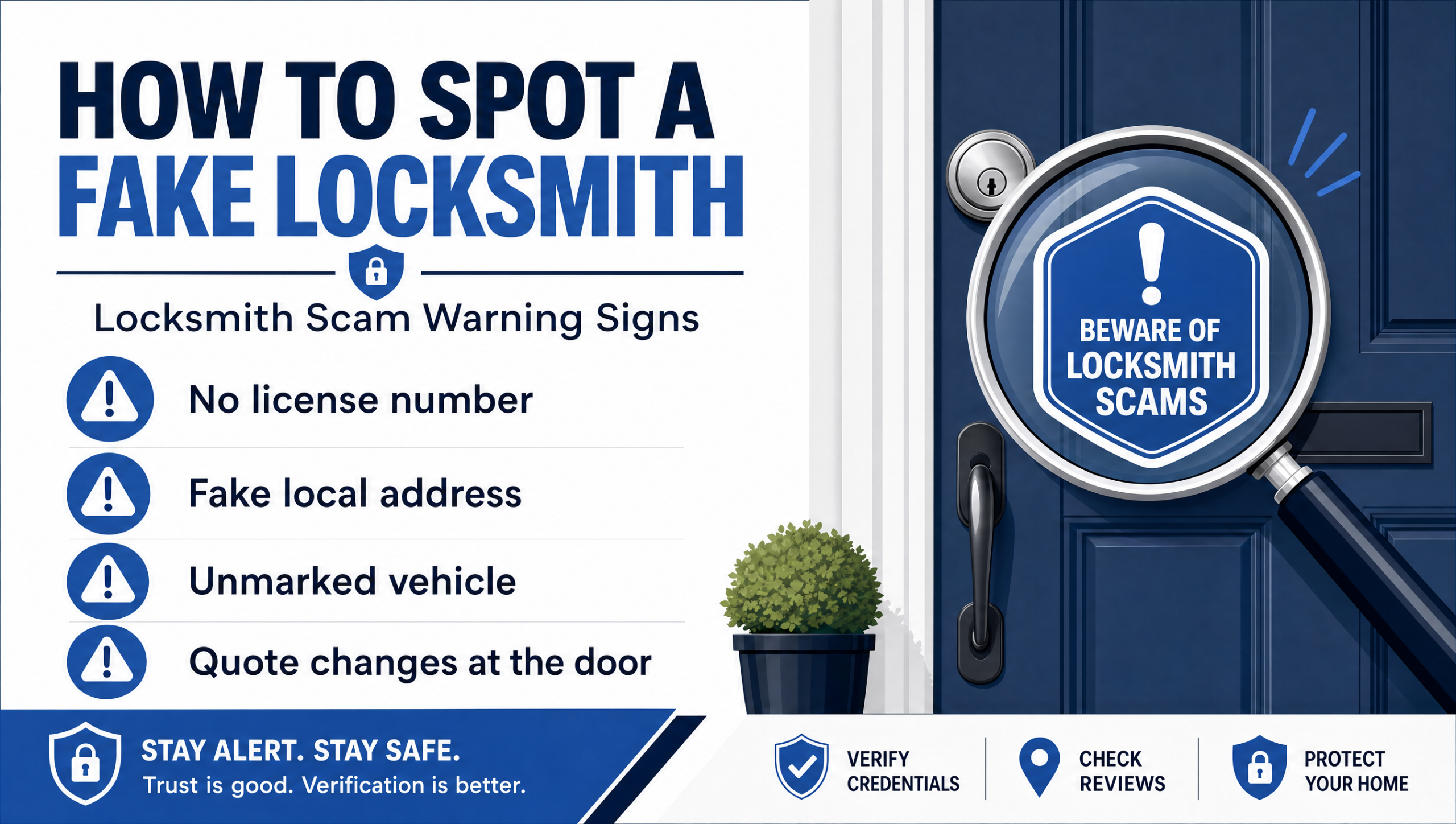
Most fraudulent listings share the same fingerprints. Once you know the pattern, the locksmith scam warning signs become hard to miss. A genuine company stands behind a verifiable name, a real address, trained technicians, and clear documentation. A fake one hides behind vague details and pressure. The table below contrasts what a scam listing shows against what a legitimate provider offers.
| Online Red Flag | What It Often Means | What a Legitimate Locksmith Shows |
|---|---|---|
| No license or certification listed | Untrained, unaccountable | Verifiable license and credentials |
| Generic name (“Locksmith Near Me”) | Lead-resale call center | A consistent, real business name |
| Dozens of map pins, one number | Phantom storefronts | One verifiable local address |
| Stock photos, no named staff | No genuine local presence | Photos of real technicians and vehicles |
| A quote that sounds too good to be true | Bait-and-switch setup | A clear written estimate up front |
| Cash demanded, no paperwork | Avoiding accountability | Documented, multiple payment options |
| Unmarked vehicle, no ID | Untracked subcontractor | Branded vehicle, identifiable staff |
| Rushes to drill the lock | Inexperience or upselling | Explains rekey, cylinder, or deadbolt first |
These signals matter because your entry hardware is the backbone of your home safety. An untrained worker who drills a lock that only needed a lock rekeying leaves you with weaker security and damaged hardware.
How Fake Locksmith Listings Trick You Online
Scam operations are built for search engines, not for service. Understanding their playbook helps you screen them out before anyone reaches your door.
Phantom Addresses and Map Pins
Many fraudulent listings drop dozens of map pins across a metro area using addresses that do not exist or belong to unrelated buildings. The goal is to appear around the corner from everyone. A real provider has one consistent, verifiable location you can confirm before you book.
Generic Names and No Real Team
Listings named only “Locksmith Near Me” or a string of keywords are usually lead-resale fronts. They sell your call to the lowest bidder. A trustworthy company shows its name, its technicians, and its background — you can read ours on our About Us page.
A Quote That Changes at the Door
One of the loudest locksmith scam warning signs is a phone quote that sounds too good to be true, followed by a much larger demand once the technician arrives. Legitimate providers give a clear written estimate and explain the work in plain language before touching your lock.
How to Verify a Professional Locksmith Before You Book
A few checks separate a credentialed professional from an opportunist.
Confirm Licensing and Credentials
Look for a verifiable license number and industry certification. The Associated Locksmiths of America lets you confirm whether a locksmith holds recognized training. Credentials signal that a technician understands lock mechanisms — from a basic deadbolt installation to a precise lock change — and follows accepted safety standards.
Read Reviews With a Critical Eye
A burst of five-star ratings all posted in a single batch is a red flag, not a green light. Look for detailed, specific reviews across platforms, and check the company’s standing with the Better Business Bureau. Patterns of complaints about surprise billing or drilled locks tell you everything you need to know.
Match the Vehicle and the Name
When a technician arrives, the marked vehicle, uniform, and paperwork should match the company you called. A worker who shows up in an unmarked car with no identification is a warning you should not ignore.
Pro Tip from Our Technicians
After cleaning up the damage left by fake operators on service calls across the Valley, our team learned one habit that protects homeowners best: ask the technician to explain the repair before any drilling starts. A trained professional will walk you through why your lock needs a rekey, a new cylinder, or a fresh deadbolt — and a scammer will rush past the explanation toward the most invasive, billable option. The willingness to slow down and teach is the clearest mark of genuine expertise.
What a Real Locksmith Protects — From Deadbolt Security to Smart Locks
A credentialed locksmith does more than open a door. The right professional strengthens the whole entry, starting with strong deadbolt security and a properly seated bolt. They inspect the thumbturn lock on your interior side to confirm it engages smoothly, align the strike, and recommend upgrades that fit your home. That might mean adding a door reinforcement kit, moving to keyless keypad door locks, or stepping up to biometric deadbolt locks. For families and rentals, a full review through our residential locksmith services catches weak points an untrained hand would miss.
Frequently Asked Questions About Spotting a Fake Locksmith
What are the biggest locksmith scam warning signs to watch for online?
The clearest signals are a missing license number, a generic name like “Locksmith Near Me,” dozens of map pins tied to one phone line, stock photos with no named team, and a phone quote that sounds too good to be true. Any one of these is reason to keep looking for a verified professional locksmith.
How can I verify that a locksmith is a licensed professional?
Ask for a license number and confirm industry certification through a recognized body such as the Associated Locksmiths of America. A credentialed technician will also have a consistent business name, a verifiable local address, and a marked service vehicle that matches the company you called.
Why do fake locksmith listings show so many local addresses?
Scam call centers create phantom storefronts to appear close to as many searchers as possible. The addresses often do not exist or belong to unrelated buildings. A real provider has one verifiable location you can confirm before booking, which is why a single, consistent address is a strong trust signal.
What should I do if a technician’s quote changes after they arrive?
Stop the job before any drilling begins. A bait-and-switch quote is one of the strongest locksmith scam warning signs. A legitimate professional provides a clear written estimate up front and explains the work in plain language, so a sudden, much larger demand is your cue to decline and call a verified company.
Does a loose or worn thumbturn lock mean I was scammed?
Not on its own. A stiff thumbturn lock often points to normal wear or a misaligned bolt. The concern is when an untrained worker drills the hardware instead of adjusting or rekeying it. A trained technician will diagnose the cause first and protect your deadbolt security rather than replace parts unnecessarily.
How does hiring a real locksmith protect my deadbolt security and home safety?
A credentialed locksmith confirms the bolt seats fully into a reinforced strike, aligns the hardware, and recommends upgrades that fit your entry — from a door reinforcement kit to keypad or biometric locks. That careful, standards-based work strengthens both your deadbolt security and your overall home safety.
Protect Your Front Door With a Locksmith You Can Verify
Spotting a fake locksmith comes down to a habit of verification: confirm the name, the address, the credentials, and the vehicle before anyone touches your hardware. When the listing checks out and the technician explains the work, you are dealing with a professional. When the details blur and the pressure rises, walk away. Our trained team serves the entire Valley from central Phoenix, and you can confirm our location and read what neighbors say about our work on Google Maps. Call (480) 448-2088 or reach us through our contact page to schedule a professional installation or a full home security audit — our technicians are ready to help you lock down your entry the right way.