A worn-out key that wiggles in the keyway, a deadbolt that turns roughly, or a recent move into a previously occupied home — these are the everyday situations where a lock cylinder replacement stops being optional and becomes a real concern for your household security. We’ve spent more than a decade walking Phoenix homeowners through this exact repair, and the good news is that, with the right preparation, swapping out a standard cylinder is well within reach for most confident DIYers.
In this guide, we’ll show you exactly how to replace a standard lock cylinder, what tools you’ll need, and the quiet details most online tutorials skip. We’re a licensed Phoenix locksmith team that handles these jobs every single day — and you can find us on Google Maps to see the work we’ve done across the Valley. Keep reading; the next few minutes could save you a service call.
Why Replacing the Lock Cylinder Matters for Your Home Security
The cylinder is the heart of any lock. It’s the mechanism that reads your key’s cuts and decides whether the door opens. When it wears out, gets damaged, or — more importantly — when you don’t know how many copies of the key are floating around, the rest of the door hardware doesn’t matter. A reinforced strike plate and a heavy deadbolt won’t protect a home if the cylinder itself is compromised.
Across our Phoenix residential locksmith service, the most common reasons we see for cylinder swaps are:
- A move into a previously owned home in Phoenix where the prior owner’s keys may still exist
- Damage from an attempted forced entry
- Wear inside the keyway after years of use under the Arizona sun and dust
- A lost or stolen key set
- Upgrading from a basic cylinder to a higher-security model
In every one of these cases, replacing the cylinder restores you to a known, controlled state — your keys, and only your keys, will work that lock.
| Cylinder Type | Security Level | Pick Resistance | Best Use Case |
|---|---|---|---|
| Standard Pin Tumbler | Basic | Low | Interior doors, low-risk areas |
| Deadbolt Cylinder (Grade 2) | Solid | Medium | Most Phoenix front doors |
| High-Security (Grade 1) | Strong | High | Main entries, vulnerable doors |
| Restricted Keyway | Premium | Very High | Homes with valuables, rentals |
| Thumbturn Lock Cylinder | Varies by grade | Medium–High | Interior side of deadbolts |
Tools and Materials You’ll Need Before Starting
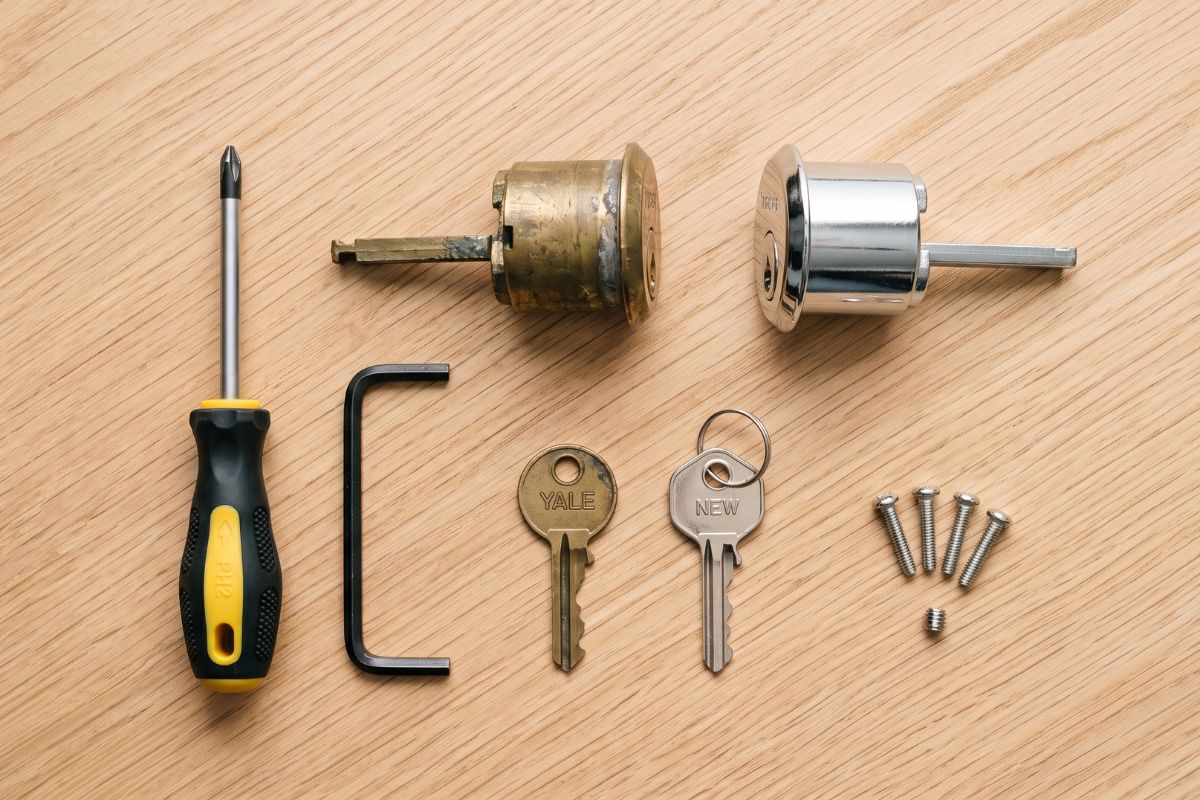
Walking into a lock cylinder replacement without the right gear is the single most common reason a 20-minute job turns into an afternoon problem. Before you touch the door, lay everything out on a clean towel near your work area.
Essential Tools
- Phillips-head screwdriver (and a flathead, just in case)
- Replacement cylinder that matches your existing lock brand and grade
- The current working key (you’ll need it to remove the old cylinder)
- Tape measure or caliper to confirm cylinder length
- Soft cloth to protect the door finish
Recommended Extras
- A small magnetic tray for screws — Phoenix tile and concrete entryways are unforgiving when fasteners drop
- Penetrating lubricant (graphite-based, not WD-40) for stubborn mechanisms
- A flashlight for shadowed door edges
We always tell our Phoenix-area residential clients to buy the replacement cylinder from a brand that matches the existing hardware — Schlage to Schlage, Kwikset to Kwikset. Mixing brands can work, but it usually means modifying the strike or the door bore, and that’s where most DIY projects go sideways.
Step-by-Step Lock Cylinder Replacement Process
Here’s the exact sequence our technicians follow on every standard residential cylinder swap. We’ve trained dozens of locksmiths through this same process at our Phoenix locksmith team, and the order matters.
Step 1: Remove the Interior Trim and Mounting Screws
Open the door so you can work on both sides. On the interior side of the deadbolt or knob, locate the two long mounting screws — usually visible on the rose plate. Loosen them slowly while supporting the exterior cylinder with your other hand so it doesn’t drop and scrape the door.
Step 2: Pull the Two Halves Apart
Once the screws are out, the exterior cylinder and interior thumbturn will separate. Set both pieces on your towel. Take a good look at how the connecting tailpiece engages the latch or deadbolt mechanism — you’ll need to mirror this orientation when installing the new cylinder.
Step 3: Remove the Latch or Deadbolt Bolt (If Replacing the Full Lock)
For a pure cylinder swap, you can often skip this step. But if you’re upgrading the entire deadbolt — which we recommend during any home security service — remove the two screws on the door edge that hold the bolt assembly in place.
Step 4: Insert the New Cylinder
Slide the new exterior cylinder into the door bore, threading the tailpiece through the latch mechanism. Match the orientation you noted in Step 2.
Step 5: Attach the Interior Side
Line up the interior thumbturn (or matching cylinder if you have a double-cylinder deadbolt) and start both mounting screws by hand. Never drive them in with a power tool — overtightening cracks the housing.
Step 6: Test Everything Before You Walk Away
With the door open, lock and unlock the cylinder a dozen times with the new key. Then close the door and repeat the test. The bolt should extend and retract smoothly without any drag. If you feel resistance, loosen the screws a quarter turn and retest.
Pro Tip from a Phoenix Locksmith
The single biggest mistake we see Phoenix homeowners make isn’t installation — it’s measurement. Standard residential doors are 1-3/8″ or 1-3/4″ thick, and cylinders are sized accordingly. If you buy a cylinder built for a thicker commercial door, the tailpiece will protrude and the lock will feel loose forever. Always measure your door thickness with a tape before ordering parts. We learned this the hard way on a Scottsdale job in our early years, and it’s saved hundreds of customers a return trip since.
When to Call a Professional Locksmith Instead
DIY works for standard cylinders on undamaged doors. There are situations, though, where calling our professional Phoenix locksmiths is the smarter call:
- The cylinder is seized due to broken pins or tampering
- You’re upgrading to a high-security or restricted keyway system
- The door has prior damage from a forced entry attempt
- You want a master key system where one key opens multiple doors
- You’re managing a rental property in Phoenix and need documented rekeys between tenants
Our team has been serving the Valley for over a decade, our technicians are background-checked and trained in modern lock systems, and every job we do comes with a written warranty on parts and labor. We’re licensed, bonded, and insured in Arizona, and you can verify our standing on our Google Maps profile, where homeowners across Phoenix have shared their experiences.
Common Mistakes That Compromise Deadbolt Security
Even a perfect cylinder install can leave a door vulnerable if these details get overlooked. Our residential security specialists check for all of these on every visit:
- Mounting screws shorter than 3 inches in the strike plate
- A misaligned strike that prevents full bolt extension
- Worn weatherstripping that lets the door flex under pressure
- Hollow-core doors paired with high-grade locks (a mismatch)
- Spare keys hidden in obvious outdoor locations
A strong cylinder is one piece of a layered system. If you’d like a full home security audit in Phoenix, our team walks the entire envelope of your home and gives you written recommendations.
Frequently Asked Questions
How long does a standard lock cylinder replacement take?
For a confident DIYer with the right tools, a standard residential cylinder swap takes about 20 to 30 minutes per door. Our trained Phoenix technicians complete most replacements in under 15 minutes, including testing.
Can I replace just the cylinder without changing the entire lock?
Yes. If your existing lock body and deadbolt are in good shape, swapping only the cylinder is a smart, economical option. This is the same principle behind rekeying — you change what the key reads without replacing the whole assembly.
Is a thumbturn lock less secure than a double-cylinder deadbolt?
A thumbturn is more convenient for emergency exit, which is why most Phoenix building codes prefer it on residential front doors. A double-cylinder deadbolt requires a key on both sides, offering more security against glass-break entries but creating an exit risk during a fire. Our locksmiths can help you weigh both options for your specific door.
What’s the difference between rekeying and cylinder replacement?
Rekeying changes the internal pins of an existing cylinder so the old keys stop working. Cylinder replacement swaps the entire mechanism for a new one. Replacement is the right call when the cylinder is damaged, worn, or being upgraded to a higher security grade.
Will a new cylinder work with my existing key?
No — a new cylinder comes with its own factory-cut keys. If you want all your doors to open with a single key, ask our Phoenix team about keying alike during installation. We can match multiple cylinders to one key during the job.
Are higher-grade cylinders worth the investment for a Phoenix home?
For main entry doors, yes. ANSI Grade 1 and high-security cylinders resist drilling, picking, and bumping — three of the most common entry methods we see in our service calls across the Valley. Interior doors can stick with standard grades.
Putting It All Together
A confident lock cylinder replacement comes down to three things: the right tools, an honest measurement, and the patience to test before walking away. If you’re handling a standard residential cylinder on a sound door, the steps above will get you there. If you’re staring at a damaged cylinder, an upgrade decision, or a home where you don’t fully trust the key history, that’s where bringing in a trained pro pays off.
If you found this guide helpful, you might also want to read our piece on front door reinforcement — the cylinder is one layer, but the door, frame, and strike plate matter just as much.
For over a decade we’ve served homeowners across Phoenix, Scottsdale, Glendale, Tempe, and the surrounding Valley communities. Our technicians are licensed, background-checked, and trained on modern lock systems from every major brand. Every job carries a written warranty, and our online reputation is built on hundreds of homeowners who trusted us with their deadbolt security and home safety.
Call Phoenix Valley Wide Locksmith today, visit our contact page to schedule a free security assessment, or stop by our local listing on Google Maps to see why your neighbors recommend us. Whether you need a single cylinder swapped or a full security upgrade, we’re ready when you are.