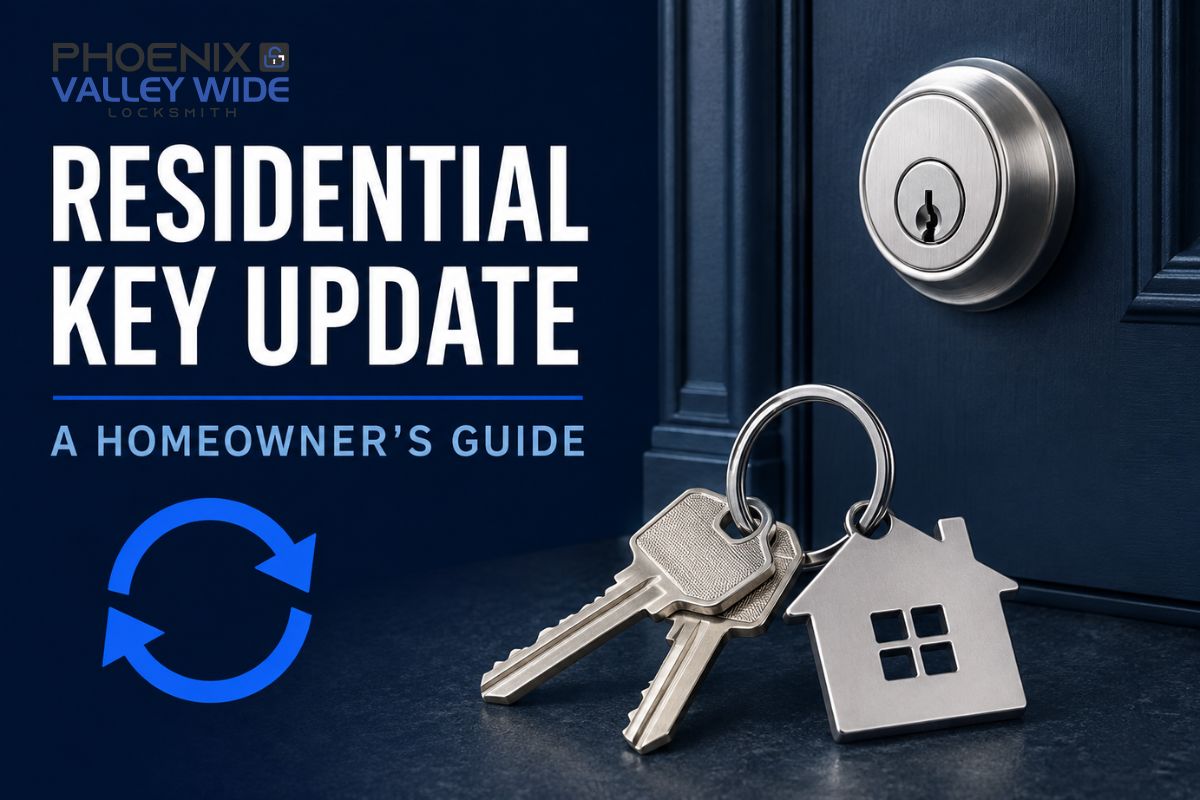
To rekey a lock, you change the cylinder’s internal key configuration so the old key no longer operates it and a new compatible key does. Homeowners can often rekey a lock designed with a consumer rekey feature by using the current working key, the manufacturer’s rekey tool, and a compatible new key. A conventional pin-tumbler lock usually requires removing the cylinder, replacing its pins with a model-specific rekey kit, and carefully reassembling it.
Rekeying can be useful after moving into a home, recovering from an unreturned key, changing tenants, or simplifying several compatible locks to operate with one key. It is different from replacing a lock: rekeying retains serviceable hardware, while replacement installs a different lock or cylinder.
This guide explains how to rekey a lock you own or are authorized to manage. It is intended for standard residential hardware in working condition. Lock designs vary, so identify the brand, model, cylinder, and keyway before buying a kit or taking anything apart. If the lock is damaged, the current key is unavailable, or the property uses restricted or commercial keying, contact a qualified professional.
What Does It Mean to Rekey a Lock?
Most conventional residential cylinders use pin stacks that align at a shear line when the correct key is inserted. During a traditional rekey, the cylinder is configured with pins that match the cuts of a different compatible key. After the work is completed correctly, the new key aligns the cylinder and the previous key does not.
Consumer rekey systems achieve the same practical result through a manufacturer-specific mechanism. They are designed to be reset without removing individual pins, but they still require the correct current key, the proper tool, and a compatible replacement key. A rekey tool from one product family should not be assumed to work with another.
| Option | What changes | Best fit | Main limitation |
|---|---|---|---|
| Consumer rekey system | Internal mechanism is reset with the manufacturer’s tool | Compatible homeowner-oriented locks with a working key | Only works with the specified brand, system, and keyway |
| Traditional pin-tumbler rekey | Individual pins are changed to match a new key | Serviceable conventional cylinders | Small parts and pin order require precision |
| Lock replacement | The cylinder or complete hardware is replaced | Damaged, worn, incompatible, or upgraded hardware | Usually involves new parts and installation |
Rekeying does not repair a bent latch, misaligned door, loose housing, damaged cylinder, worn keyway, or failing electronic component. If the key is difficult to turn because the door binds against the frame, changing the key combination will not correct the underlying alignment problem. Review our residential locksmith services if you need help identifying whether the lock, latch, door, or frame is causing the symptom.
Tools You Will Need
The correct tool list depends on the type of lock. Do not order a generic kit based only on the appearance of the knob or deadbolt; verify the manufacturer, model, cylinder format, and keyway first.
- Current working key: Required by most consumer rekey systems and useful for safely removing many conventional cylinders.
- Compatible new key: The key must match the lock’s supported keyway. Similar-looking keys are not necessarily interchangeable.
- Manufacturer rekey tool: Needed for locks specifically designed for owner rekeying.
- Model-specific rekey kit: For a conventional pin-tumbler cylinder, use the correct pins, follower, and tools for that product family.
- Screwdrivers: Commonly needed to remove interior trim or the lock from the door.
- Plug follower and tweezers: Used in traditional rekeying to control the plug and handle small pins.
- Parts tray and clean work surface: Prevents springs, pins, clips, and screws from being lost.
- Manufacturer instructions: Keep the exact manual or official procedure beside you throughout the job.
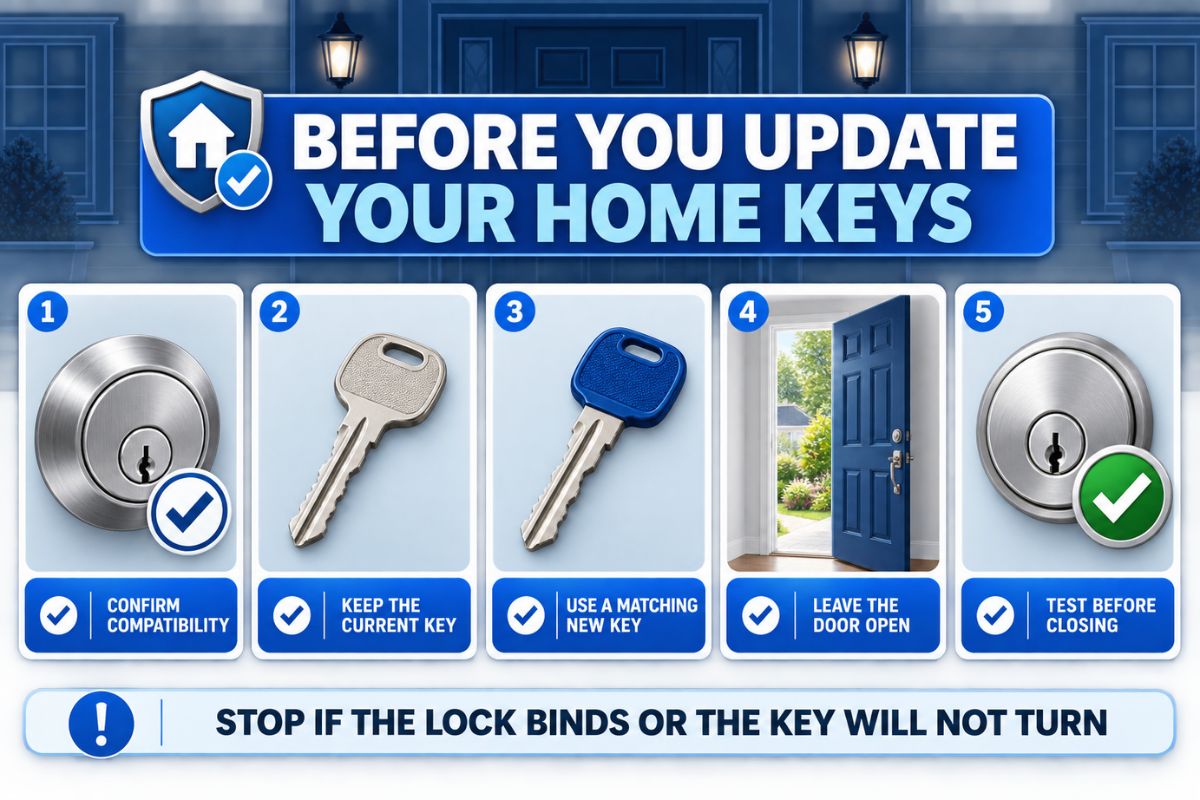
Steps to Rekey a Lock at Home
There is no universal sequence for every cylinder. Use the steps below as a planning framework, then follow the official instructions for your exact model. Never force a key, plug, clip, or rekey tool.
- Confirm authorization and compatibility. Work only on a lock you own or are authorized to service. Record the manufacturer and model, confirm whether it is a consumer rekey system or a conventional pin-tumbler cylinder, and verify that the new key matches the supported keyway.
- Open and secure the door. Leave the door open throughout the entire procedure. Stabilize it so it cannot swing or close. Confirm that another entrance is available before changing an exterior lock.
- Test the current key and hardware. Operate the lock several times with the door open. The key should insert and rotate normally, and the bolt or latch should move without binding. Stop if the lock is damaged or the key does not operate it consistently.
- Choose the correct procedure. For an owner-rekeyable lock, use the current key and dedicated rekey tool exactly as described by the manufacturer. For a conventional cylinder, remove the hardware and cylinder according to the model instructions before attempting to access the plug.
- Reconfigure the cylinder carefully. On a consumer system, keep the key fully inserted and follow the specified tool insertion and rotation sequence. On a conventional pin-tumbler lock, keep the plug controlled with the correct follower and replace only the key pins using the chart supplied with the compatible kit. Do not disturb upper pins or springs.
- Check the cylinder before reinstalling. With the plug secured, test the new key gently. It should insert completely and rotate smoothly. The old key should no longer operate the cylinder. If the new key binds, stop and correct the configuration rather than forcing it.
- Reassemble the hardware. Reinstall clips, tailpieces, cylinder components, trim, and screws in their original positions. Tighten the hardware evenly without overtightening or pinching the cylinder.
- Test repeatedly with the door open. Lock and unlock the hardware several times using the new key. Check both bolt movement and key removal. Only close the door after the lock works smoothly and consistently in every intended position.
For a consumer rekey product, the official sequence may specify exact key rotations and tool placement. Follow that procedure precisely; partial insertion or movement of the key during the reset can misconfigure the cylinder. For a traditional lock, allowing the plug to slide out without a follower can release upper pins and springs, turning a manageable rekey into a more complex rebuild.
Common Mistakes
- Buying a kit for the wrong keyway: Brand names alone do not guarantee that the pins, keys, or tools are compatible.
- Starting without a working key: Many DIY rekey systems require the current operating key. A lost-key situation may need professional decoding or cylinder replacement.
- Closing the door too early: Always complete multiple tests while the door remains open.
- Pulling or tilting the key during a reset: On some owner-rekeyable cylinders, this can leave the mechanism misconfigured.
- Losing control of the plug: In a pin-tumbler cylinder, a missing or poorly positioned follower can release driver pins and springs.
- Mixing pins or guessing their sizes: The key cuts must correspond to the correct pin sizes. Guessing can create a rough or unreliable cylinder.
- Forcing the new key: Resistance indicates an incorrect pin stack, misalignment, damaged part, or incompatible key—not a need for more pressure.
- Ignoring a door-alignment problem: A rekey changes key control, not the way the door fits the frame.
When to Hire a Professional
DIY rekeying is most appropriate when the lock is designed for owner rekeying, the current key works, the new key is compatible, and the hardware is in good condition. A professional assessment is the safer choice when any of those conditions are missing.
Contact a locksmith when you have no working key, several locks with uncertain compatibility, a master-keyed property, restricted or high-security cylinders, commercial hardware, an interchangeable core, a malfunctioning smart lock, broken internal parts, or a cylinder that has already been disassembled incorrectly. Businesses should also consider key-control records, user access, door function, and the effect of rekeying on an existing master-key hierarchy. Phoenix Valley Wide Locksmith provides commercial locksmith services for more complex property needs.
A locksmith can also help determine whether rekeying is worthwhile. Worn or damaged hardware may be better replaced, while several compatible locks may be rekeyed to one authorized key. If you are unsure which option fits your door, review all available locksmith services before scheduling.
Frequently Asked Questions
Can I rekey any lock myself?
No. Some locks are designed for owner rekeying, while conventional pin-tumbler cylinders require a compatible kit and careful disassembly. Restricted, high-security, commercial, master-keyed, damaged, and unfamiliar cylinders are better handled by a professional. Always confirm the exact manufacturer, model, and keyway before beginning.
Can I rekey a lock without the original key?
Many consumer rekey systems require the current working key, and conventional cylinders are easier to remove and service when a working key is available. Without it, the job may require specialized decoding, disassembly, or replacement. Contact a locksmith rather than forcing or drilling the lock.
Is rekeying the same as changing a lock?
No. Rekeying changes the internal key combination so a different compatible key operates the existing cylinder. Changing a lock replaces the cylinder or complete hardware. Rekeying may suit functional compatible locks, while replacement may be appropriate for damaged, worn, outdated, or incompatible hardware.
Can several locks be rekeyed to use one key?
Often, yes, when the locks use compatible cylinders and the same supported keyway. Locks from different systems or keyways may not be keyed alike without changing cylinders or hardware. Verify compatibility before purchasing a kit or asking a locksmith to create a one-key setup.
Why does the new key feel rough after rekeying?
A rough key may indicate an incorrect pin size, mixed components, a key that is not cut accurately, a misassembled cylinder, dirt, wear, or door alignment that loads the bolt. Do not force it. Test with the door open and have the cylinder inspected if operation is not smooth.
Should I rekey locks after moving into a home?
Rekeying is a practical way to establish new key control when you do not know who may still have copies of the previous key. A locksmith can inspect the existing hardware, identify compatible locks, rekey serviceable cylinders, and recommend replacement only where condition or compatibility requires it.
Need Help Rekeying a Lock in Phoenix?
If your lock is incompatible with a DIY kit, the current key is missing, or the cylinder no longer operates correctly, Phoenix Valley Wide Locksmith can assess the hardware and recommend rekeying or replacement based on its condition.
Call (480) 448-2088This guide is for locks you own or are authorized to service. Procedures vary by manufacturer and model. Follow the official instructions for the exact product and keep the door open until the new key has been tested successfully.